
How to Identify Different Snake Types
Nature is full of creatures that are either truly dangerous or clever imitators. Mimicry allows some animals to appear more threatening than they really are. Snakes are a common example, with many non-venomous species looking like venomous ones. Our guide shows how to tell the difference, and all snake handling should be left to experts like Barnes Wildlife Control.
In Miami Valley, snakes can be found at home, in parks, or in forested areas. Knowing how to identify them helps protect you and your family, and it also highlights the valuable role snakes play in the environment.
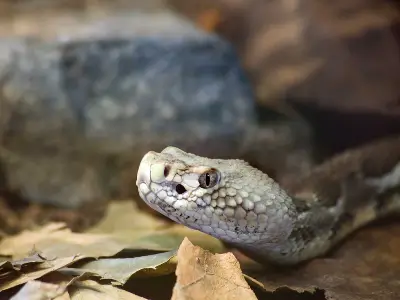
Distinguishing Venomous Snakes from Non-Venomous Mimics
Venomous snakes in the United States include copperheads, cottonmouths, coral snakes, and rattlesnakes. Pit vipers, which consist of copperheads, cottonmouths, and rattlesnakes, are often distinguished by their diamond-shaped heads. Identification can be tricky, though, since many harmless snakes mimic this shape to avoid predators.
Gopher snakes are a perfect example of a non-venomous mimic. They may bite when threatened and use clever behaviors to appear dangerous. By coiling their bodies, flattening their heads, and tapping their tails on dry leaves, they convincingly imitate rattlesnakes.
Although a diamond-shaped head can be a helpful clue, it is not an absolute sign of danger. Non-venomous snakes sometimes resemble pit vipers closely. The safest approach is to maintain distance and avoid handling any unknown snake.
Coral Snakes Versus King Snakes Identification
Coral snakes are easily recognized by their bright, warning colors. Reds, yellows, and blues signal danger to predators, while rattlesnakes rely on camouflage to avoid detection. Their muted tones allow them to hunt quietly and remain unnoticed in their environment.
King snakes, which are non-venomous, have similar banding patterns to coral snakes, making them easy to confuse. The key difference is the color sequence: if red touches yellow, it indicates a coral snake; if red touches black, it is a king snake. The rhyme “if red touches yellow, you’re a deadly fellow” helps people remember this distinction.
Interestingly, king snakes even eat rattlesnakes, showing the important role they play in nature. Handling snakes should always be left to trained professionals. Venomous snakes, despite their potential danger, help control pests and maintain ecological balance.
Constrictor Snakes in Miami Valley
In Miami Valley, warm weather has created an environment where escaped or released pet snakes can thrive in forests, swamps, and other areas. Constrictors, such as boa constrictors, kill by suffocation. They are not venomous, but their bite and powerful coils can be dangerous. Native snakes, including the small rubber boa, contribute to the ecosystem by keeping rodent populations under control.
A snake’s pupils can sometimes indicate if it is venomous. Round pupils typically belong to non-venomous snakes, while vertical slits may indicate venom. However, this is not a guaranteed method, particularly when snakes are shedding, and their eyes become cloudy. Visual cues alone are insufficient for safe identification.
The safest course of action is to maintain distance and call trained professionals for removal. Experts can handle snakes safely, protecting both humans and the animals. Following these steps ensures residents can coexist with wildlife while minimizing the chance of injury.
Protecting Your Home from Snakes in Miami Valley
While there is no guaranteed way to identify venomous snakes, specific characteristics can provide clues. Venomous snakes often have muted or dull scales, larger and more noticeable scales, and a stockier body, though coral snakes do not always fit this pattern. Paying attention to these signs helps keep you safe in Miami Valley.
If you spot a snake, calling a trained expert is the safest choice. Barnes Wildlife Control delivers professional snake removal, carefully managing the situation to safeguard your home, family, and the snake.
Connect with Barnes Wildlife Control to safely remove snakes and wildlife from your property.