
Greater Dayton Ohio Spotted Lanternfly Extermination Service
Services Provided By Barnes Wildlife Control
Serving Southwestern Ohio
Serving Miami Valley | Montgomery County | Troy | Centerville | Beavercreek
Barnes Wildlife Control Spotted Lanternfly Extermination Experts Are Battling Ohio’s Spotted Lanternfly Invasion
Barnes Wildlife Control Uncovers The Detrimental Impact Of The Spotted Lanternfly in Ohio
As Ohio’s landscapes bloom and thrive, an insidious threat looms large – the Spotted Lanternfly (Lycorma delicatula) invasion. This invasive pest, native to Asia, has found its way into the greater Dayton, Ohio region and the entire Buckeye state, wreaking havoc on agricultural crops, ornamental plants, and delicate ecosystems.
In this detailed exploration, our Barnes Wildlife Control Spotted Lanternfly Extermination experts uncover the detrimental impact of the Spotted Lanternfly in Ohio and unveil a number of our strategic approaches to combat its destructive nature effectively.
The Spotted Lanternfly Menace in Ohio
Ohio’s diverse terrain, encompassing lush forests, productive farmlands, and urban green spaces, provides an ideal habitat for the Spotted Lanternfly to establish its presence. Since its initial detection in the state, the population has proliferated, posing a dire threat to Ohio’s agricultural heritage and ecological balance.
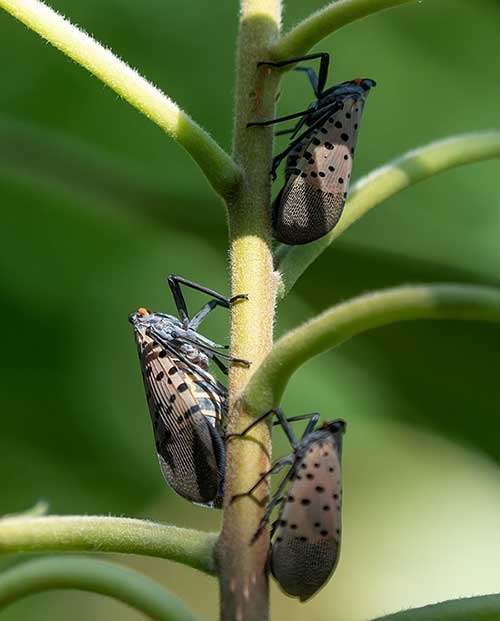
This invasive pest inflicts damage by voraciously feeding on the sap of various plants, including fruit trees like apple and peach, grapevines, maple, and walnut trees. The weakening of host plants due to sustained feeding not only compromises their health but also renders them susceptible to secondary infections and diseases. Furthermore, the excretion of honeydew by the Spotted Lanternfly fosters the growth of sooty mold, further exacerbating the damage and aesthetic appeal of affected plants.
Spotted Lanternfly Life Cycle

Spotted Lanternfly In Hand
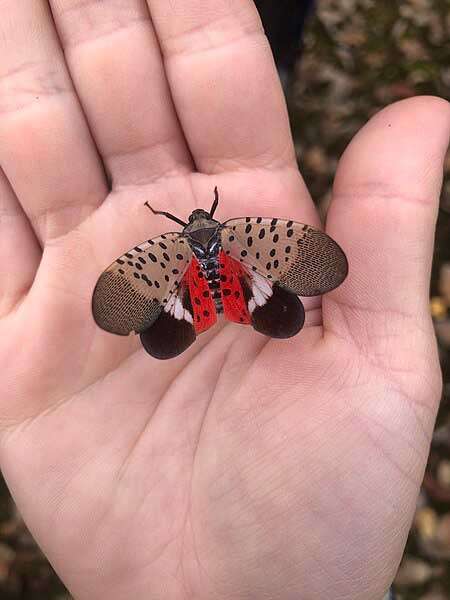
The Spotted Lanternfly Economic Toll on Ohio’s Agriculture
Ohio’s agricultural sector, comprising a diverse array of crops and commodities, bears the brunt of the Spotted Lanternfly’s onslaught. Fruit orchards, vineyards, nurseries, and forested areas face significant losses in yield and quality, jeopardizing the livelihoods of farmers and the state’s economy.
The impact extends beyond immediate crop damage, manifesting in increased production costs, heightened pest management efforts, and potential trade restrictions due to quarantine measures. As Ohio strives to maintain its reputation as an agricultural powerhouse, the unchecked spread of the Spotted Lanternfly poses a formidable challenge to sustainable farming practices and food security. So Barnes Wildlife Control’s Spotted Lanternfly Extermination team are here to take on the battle and minimize their impact.
Ecological Disruption and Environmental Concerns
Beyond agriculture, the Spotted Lanternfly’s presence disrupts the delicate balance of Ohio’s ecosystems, threatening native flora and fauna. By outcompeting indigenous species for resources and altering habitat dynamics, this invasive pest undermines biodiversity and ecosystem resilience.
The displacement of native plants by the Spotted Lanternfly compromises food sources and habitat for wildlife, leading to cascading effects throughout the food chain. Moreover, the loss of tree cover and vegetation density due to infestations can exacerbate soil erosion, water runoff, and other environmental concerns, amplifying the ecological footprint of this invasive species.
Dr. Don Cipollini, Wright State University professor of biology, said, “This is a pest we’re concerned about primarily for things like fruit trees, apples, grapes, hops, things like that.”
See MIAMI VALLEY NEWS “Spotted lanternfly seen around Ohio this summer”
Combatting the Spotted Lanternfly Invasion in Ohio
As Ohio confronts the escalating threat posed by the Spotted Lanternfly, concerted efforts are underway to mitigate its impact and prevent further spread. Through collaboration among state agencies, academic institutions, industry stakeholders, and the public, proactive measures are being implemented to combat this invasive pest effectively with Spotted Lanternfly Extermination methods.
- Enhanced Surveillance and Monitoring: Leveraging advanced detection methods and citizen science initiatives, Ohio’s authorities are actively monitoring the spread of the Spotted Lanternfly and identifying high-risk areas for targeted intervention.
- Strategic Management Practices: Integrated pest management (IPM) strategies, encompassing a combination of cultural, biological, and chemical control measures, are being deployed to suppress Spotted Lanternfly populations while minimizing environmental impact.
- Public Awareness and Education: Raising awareness among Ohio residents, businesses, and landowners is crucial in fostering a collective response to the Spotted Lanternfly threat. Educational outreach programs, workshops, and informational resources empower individuals to identify, report, and mitigate infestations in their communities.
- Research and Innovation: Investing in scientific research and technological innovations is paramount to developing sustainable solutions for Spotted Lanternfly management. By exploring biological control agents, refining monitoring techniques, and evaluating the efficacy of control measures, Ohio aims to stay ahead of the invasive pest’s adaptive strategies.
What Does Barnes Wildlife Control Do When Your Ohio Property Has A Spotted Lanternfly Infestation?
When Spotted Lanternflies have invaded a greater Dayton, Ohio, property, Barnes Wildlife Control can employ a range of strategies to mitigate the infestation and prevent further spread. Below are seven effective measures we can take.
Also, take the time to download the Spotted Lanternfly checklist pdf provided by the University of Pennsylvania, which also applies to Ohio.
Inspection and Assessment
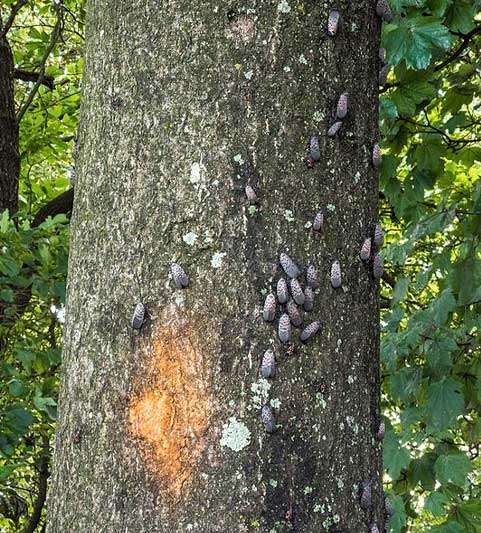
We’ll thoroughly assess the property to identify the extent of the Spotted Lanternfly infestation. Next, we determine key areas of activity, including preferred host plants, egg-laying sites, and feeding grounds. Finally, our Barnes Wildlife Control Spotted Lanternfly expert assesses potential entry points and pathways used by the Spotted Lanternflies to access the property.
Video On The Spotted Lanternfly
Integrated Pest Management (IPM) Plan
Our technician will develop a customized IPM plan tailored to the specific needs and characteristics of the property. We’ll incorporate a combination of cultural, biological, mechanical, and chemical control methods to effectively manage Spotted Lanternfly populations. Our team members will brainstorm and always prioritize environmentally friendly approaches to minimize harm to non-target organisms and reduce pesticide usage.
Mechanical Control
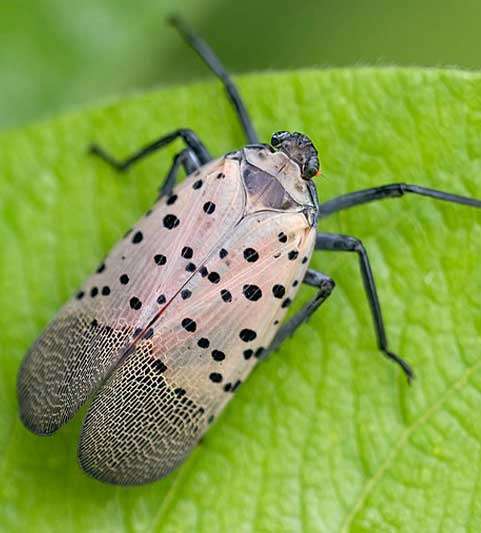
We will implement physical methods such as scraping egg masses, manually removing adult insects, and installing sticky bands or traps to capture Spotted Lanternflies when necessary. Our team will utilize vacuum devices or power washers to dislodge and eliminate insects from surfaces, foliage, and structures.

Chemical Control
We will apply the proper insecticides to targeted areas where Spotted Lanternflies congregate or breed, following all safety guidelines and regulations. Rest assured we will always select pesticides with low environmental impact and minimal risk to beneficial insects, wildlife, and human health. We will coordinate pesticide applications with optimal timing and weather conditions to maximize effectiveness.
Exclusion and Habitat Modification
We may need to seal cracks, gaps, and other potential entry points to prevent Spotted Lanternflies from infiltrating buildings, structures, and outdoor spaces. Also, we may need to remove or prune vegetation that serves as preferred host plants for Spotted Lanternflies, reducing their food sources and breeding grounds. In addition, landscaping practices should be implemented that discourage Spotted Lanternfly infestations, such as planting less susceptible plant species or using physical barriers to deter insect movement.
Education and Outreach
Our Barnes Wildlife Control technician may provide property owners with educational resources, guidelines, and best practices for Spotted Lanternfly management and prevention. Our goal is to raise awareness within the community about the threat posed by Spotted Lanternflies and the importance of early detection and reporting.