
Are Squirrels Dangerous in Your Home?
Squirrels may seem harmless when they’re running through trees or darting across your yard, but the story changes once they move into your home. Their presence can lead to health concerns, costly repairs, and significant property damage. As cute as they may be at a distance, squirrels don’t belong inside your house.
In many parts of Miami Valley, gray squirrels are one of the most common wildlife species found invading homes. Mature trees, abundant food sources, and residential neighborhoods create the ideal conditions for squirrel populations to thrive. Once squirrels gain access to a home, they can quickly turn a small wildlife problem into a major headache for homeowners.
Call 937- 340 -1867 Now
Serving Miami Valley | Montgomery County | Troy | Centerville | Beavercreek
Health Risks Associated With Squirrel Infestations
Disease Transmission
Like many wild animals, squirrels can carry bacteria and pathogens that may create health concerns when they establish nesting areas inside a home. Salmonella and leptospirosis are two common pathogens they may be carrying, which can both cause serious illnesses in humans.
These diseases are typically not spread through direct contact. As squirrels occupy attics or wall voids, droppings and urine begin to accumulate in concentrated areas. Over time, this waste can contaminate insulation, wood framing, stored belongings, and other building materials.
In severe infestations, dried waste particles may become airborne and circulate through portions of the home. This can be especially problematic for individuals with allergies, asthma, respiratory conditions, or compromised immune systems.
The longer squirrels remain inside a home or building, the greater the risk of contamination and cleanup costs.
Parasites
Not only can squirrels transmit diseases, they may also not be traveling alone. Squirrels frequently host external parasites, including fleas, ticks, and mites. After a squirrel leaves or is removed, parasites may remain behind and seek new hosts, including people and pets. In addition to causing bites and irritation, some parasites are capable of transmitting diseases to humans and animals.
Flea bites are capable of transmitting serious diseases including tularemia and (in rare cases) plague. Yes, plague still exists, and has been known to be linked to squirrel exposure as recently as 2017 in Colorado.
Ticks are also a serious threat. You may already be aware of the risks of Lyme disease in Miami Valley, but many don’t realize that squirrels can bring ticks into their homes. Just a single squirrel family nesting in or passing through your attic or home can bring dozens of ticks to your property, which exponentially increases your family’s exposure risk.
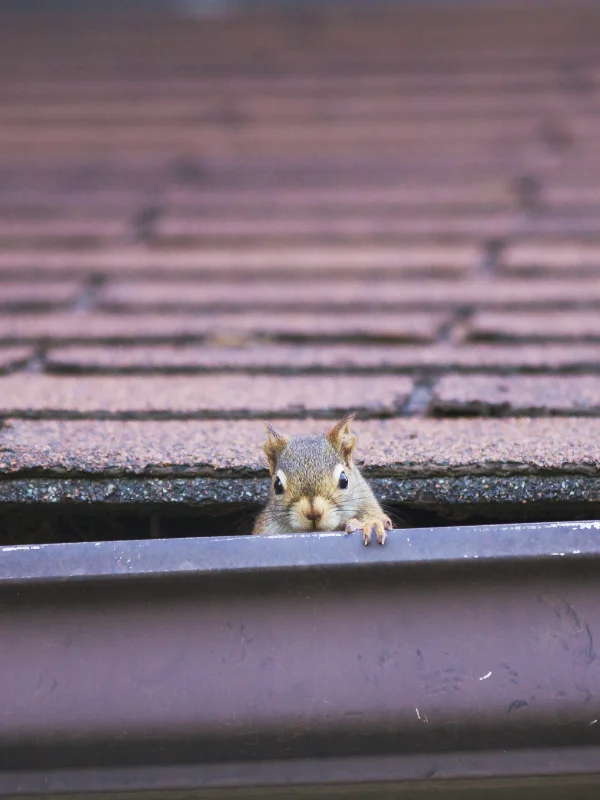
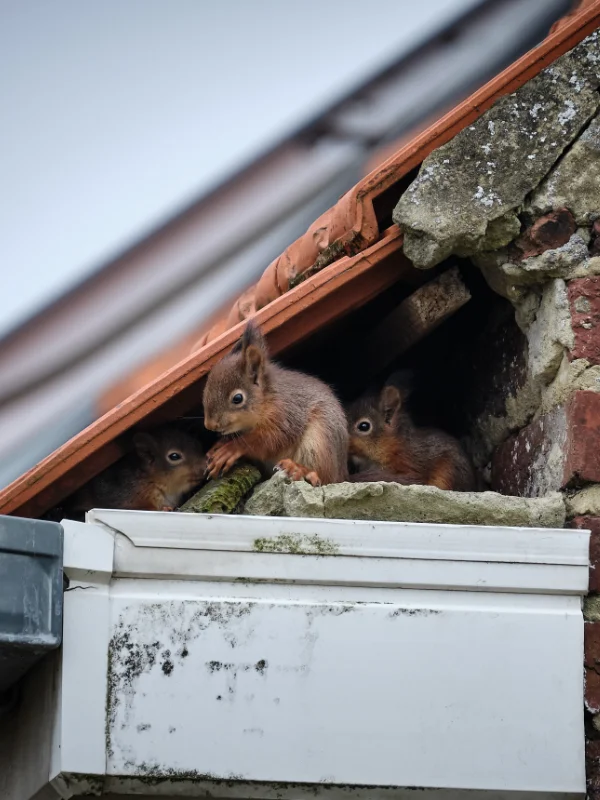
Property Damage Caused By Squirrels
Constant gnawing and structural damage.
One of the biggest problems squirrels create inside homes is their relentless chewing behavior. Squirrel teeth continuously grow throughout their lives, forcing them to gnaw on hard materials to keep them worn down. As a result, squirrels may chew on a wide variety of building materials.
They’re known to:
- Gnaw through fascia boards, window frames, door jambs, and roof decking.
- Enlarge small structural holes into gaping entry points.
- Chew through PVC pipes and ductwork.
Insulation destruction.
Your attic insulation plays a major role in your home’s comfort and energy efficiency, but squirrels see it as the perfect nesting material. Once inside an attic, squirrels will burrow through insulation, tear it apart for nesting, compress it, and contaminate it with urine and droppings.
As insulation becomes damaged and compacted, it loses its effectiveness. During Miami Valley‘s hot summers and cold winters, this can force your heating and cooling system to work harder to maintain indoor temperatures, resulting in higher utility bills.
The problem doesn’t stop there. Insulation contaminated by squirrel waste often cannot simply be cleaned. In many cases, affected areas must be professionally removed and replaced. This process may require specialized equipment, proper handling of contaminated materials, and installation of new insulation to restore the attic’s performance.
Many homeowners first notice rising energy costs before realizing squirrels have moved into their attic. Depending on the extent of the damage, insulation repairs and replacement can cost thousands of dollars.
Electrical Damage Caused by Squirrels
Squirrels chew constantly to keep their teeth from overgrowing, and electrical wiring is one of their favorite targets. They often gnaw through the protective coating surrounding wires, exposing the metal conductors underneath.
Sometimes squirrels chew completely through a wire, causing immediate power outages to lights, outlets, or appliances. In other cases, the damage is only partial, leaving the electrical system functioning while creating a hidden hazard.
Exposed wiring can come into contact with nearby metal surfaces or other wires, resulting in short circuits. Damaged insulation can also cause wires to overheat. Both situations significantly increase the risk of an electrical fire.
While insurance may help cover certain types of property damage, it cannot replace valuable possessions, family keepsakes, or the potential consequences of a house fire. For homes that have experienced squirrel activity, inspecting attic wiring and other electrical components is an important step in identifying hidden damage.
Why Squirrels Invade Homes
Squirrels enter homes for two simple reasons: shelter and food. Residential properties often provide both. Bird feeders, fallen nuts, gardens, and unsecured trash create reliable food sources. At the same time, attics offer warmth, protection from the elements, and a secure place to build nests and raise their young.
Homes surrounded by mature trees are especially vulnerable. Branches that touch or overhang the roof provide squirrels with easy access to upper portions of the home. Older homes may also have gaps around vents, deteriorated wood, loose siding, or other openings that make entry easier.
In Miami Valley, squirrels typically breed twice per year, once during late winter and again in summer. Pregnant females actively seek safe nesting locations during these periods, and attics provide far more protection than hollow trees or outdoor nests.
Signs of Squirrels in Your Home
- Sound is the first warning sign. If you notice sounds of scurrying, scratching, or thumping near your attic or walls, squirrels could be the issue.
- Chew marks could also be seen around rooflines, soffits, vents, and utility entry points.
- Damaged or missing vent covers are also something to look out for.
- Droppings look like small dark pellets, which are slightly larger than mouse droppings.
- A musty or unpleasant odor could become noticeable, especially near attic access points.
- Stains on ceilings could be an indication of urine accumulation above.
- Unusual electrical issues such as flickering lights, non-functioning outlets, or tripped breakers could suggest wiring damage.
How to Protect Your Miami Valley Property
Preventing squirrels from entering your home is often far easier and less expensive than repairing the damage they leave behind. Complete protection may not be possible, but taking a few proactive steps can significantly reduce the risk.
Keep tree branches trimmed.
Branches that extend over or near the roof provide squirrels with direct access to your home. Trimming limbs back six to eight feet from the structure helps eliminate many of the routes squirrels would otherwise use to reach the roofline.
Routinely inspect your home’s exterior, especially near the roofline.
Inspect your home’s exterior on a regular basis, paying close attention to the roof, soffits, vents, fascia boards, and other potential entry points. Even small openings can allow squirrels to gain access. Damaged vents and openings should be repaired promptly, and durable materials such as heavy-gauge metal screening can be installed where ventilation is necessary.
Reduce access to food sources that attract squirrels to your property.
Limiting food availability can make your property less attractive to squirrels. Consider using squirrel-resistant bird feeders, cleaning up fallen fruit and nuts, securing trash containers, and avoiding the storage of pet food outdoors.
Even with proper prevention measures, squirrels can still find their way inside. When they do, professional wildlife removal is the safest and most effective solution.
Let Barnes Wildlife Control Solve Your Squirrel Issue
Squirrels may seem harmless outdoors, but once they move into a home they can create serious health concerns and costly property damage. From contaminated insulation and parasite activity to damaged wiring and structural deterioration, squirrel infestations should never be ignored.
The wildlife professionals at Barnes Wildlife Control provide thorough inspections, humane squirrel removal services, and exclusion solutions designed to prevent future intrusions. We identify how squirrels entered, remove the animals safely, and seal vulnerable access points to help protect your home in the future.
Contact Barnes Wildlife Control today to schedule an inspection and receive a service quote.