
Key Takeaways:
- Winter forces these animals to take greater risks and approach human homes to scavenge for food to replenish depleted fat reserves.
- Activity spikes in January (raccoons) and February (skunks) as the breeding season begins.
- Natural dens often flood or freeze, driving wildlife to seek dry, elevated, or insulated spaces like attics, chimneys, crawl spaces, and sheds.
- Wildlife-proofing requires securing trash lids, removing outdoor pet food, and sealing structural gaps in siding, shingles, and foundations.
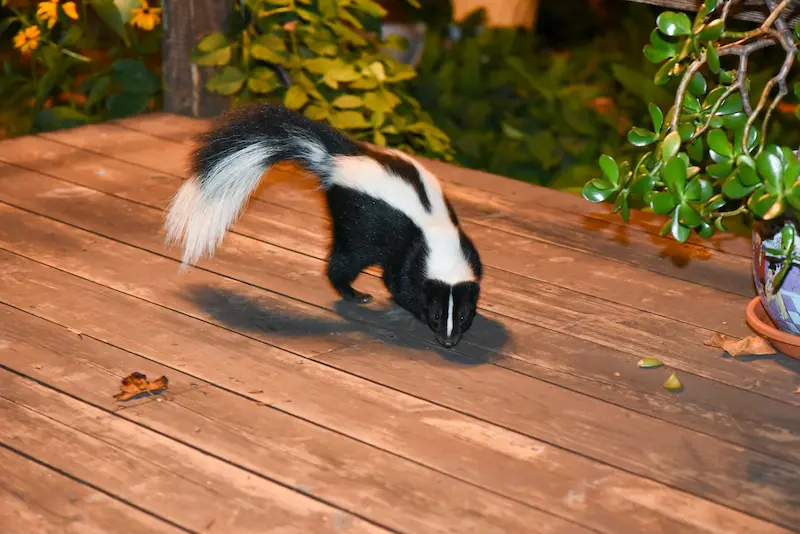
While many animals hibernate, go into hiding, or die off in winter, raccoons and skunks remain active. In fact, in some cases, they may actually become more active. A big part of why is that late winter and early spring are their breeding seasons, which often leads to them trying to get inside warm homes for shelter.
Remember that these animals aren’t trying to cause problems. They’re simply exercising their survival instinct during a challenging season. However, their survival shouldn’t come at the expense of your home’s integrity or your family’s safety.
In this blog, we’re going to go over why raccoons and skunks stay active in the winter, and how you can protect your home.
Reasons Why Raccoons and Skunks Are Active in Winter
1. Food Scarcity
A major winter challenge for wildlife is finding enough food to sustain their fat reserves. Unlike the abundance of summer and fall, winter forces a survival situation that drives both raccoons and skunks to take greater risks, often approaching human homes.
Despite the common belief that skunks hibernate (they do not), they must emerge regularly to forage for food. Raccoons face similar difficulties. Their remarkable intelligence and agile paws allow them to be particularly effective at exploiting human food sources. In winter, they become even more audacious, frequently necessitating emergency raccoon removal when they break into homes in search of sustenance.
2. Freeze-Thaw Cycles
When winter temperatures rise above freezing, the resulting warm spells cause a noticeable increase in the activity of raccoons and skunks.
These temperature fluctuations impact wildlife behavior for several reasons:
- Animals must actively seek to replenish the fat reserves they depleted burning calories during previous cold snaps.
- The cycles of freezing and thawing can damage existing entry points or reveal new openings in homes that were previously sealed by ice or snow.
- These changing weather conditions can flood or damage existing natural den sites, compelling wildlife to search for new shelter.
3. Lack of Shelter Options
When natural den sites are scarce, different species may end up sharing space, sometimes within your home.
Where do raccoons and skunks tend to look when natural dens are unavailable? They seek out dry, protected spaces such as under porches, in sheds, or in crawl spaces. Raccoons also look for winter shelter but prefer higher locations like attics or chimney areas. This scarcity of natural winter shelter is the main reason why raccoons and skunks remain active during the winter, constantly searching for better accommodation.
4. Mating Season
Mating season is another crucial factor influencing winter wildlife activity. For example, skunks do not truly hibernate, and their mating season can start as early as February.
Raccoons begin their mating season even earlier, often in January. During this time, males significantly expand their territory, which is a major reason why raccoons remain active throughout the winter.
Why Raccoons Get Into Trash Dayton Ohio? Raccoon Problems? Don’t Fret! Call Barnes Wildlife Control’s Raccoon Trapping Team At (937) 340-1867.
Torpor vs Hibernation – What’s the Difference?
Raccoons and skunks do not truly hibernate. Instead, they enter a state called torpor, which is distinct from the deep sleep of true hibernators like groundhogs.
True hibernation involves a drastic, sustained drop in body temperature, heart rate, and breathing that lasts for months. Animals in true hibernation are extremely difficult to wake and remain in their dens all winter.
Torpor, however, is similar to taking long, intermittent naps during the coldest periods. Both raccoons and skunks enter torpor during severe cold snaps, but they wake up frequently, particularly during winter’s unpredictable freeze-thaw cycles. Their body temperature drops only slightly, and they can become fully active within hours when weather conditions improve.
How to Get Rid of Winter Wildlife
- Eliminate food sources that attract hungry wildlife. Secure garbage cans with wildlife-proof lids, bring pet food inside, and keep barbecue grills clean.
- Identify and seal potential entry points before animals discover them.
- Pay special attention to areas where freeze-thaw cycles may have created new openings, such as loose roof shingles, gaps in siding, or spaces around foundation vents.
- Address existing wildlife presence immediately. Removing animals in the late winter is often more difficult than in the summer because they are more desperate and may have young.
Winter Wildlife Exclusion & Removal Services
Don’t wait for warmer weather to address potential wildlife problems. If you’re noticing mysterious noises in your attic, unusual odors around your property, or visible wildlife activity, winter is the optimal time to act. Effective raccoon control and skunk control demands expertise, specialized equipment, and a deep understanding of seasonal animal behavior.
Contact the wildlife professionals at Barnes Wildlife Control for a thorough assessment of your Miami Valley property and to develop a comprehensive exclusion plan. For immediate emergencies, reach out to us ASAP for fast service!